
Hemorrhoidal Disease
Hemorrhoidal Disease
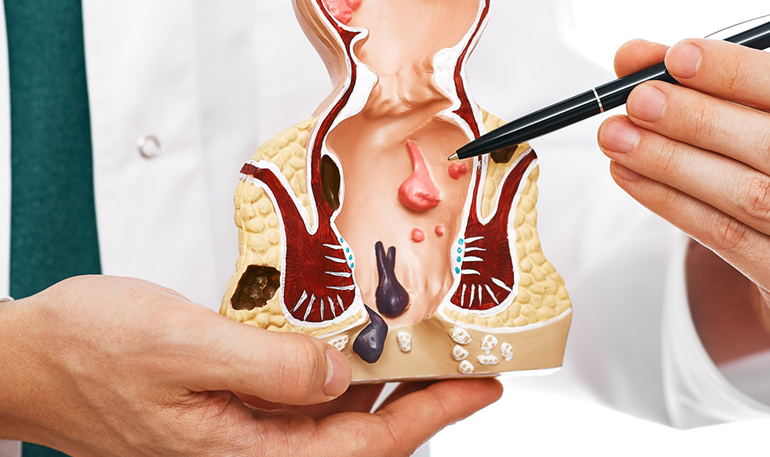
Hemorrhoids are vascular cushions that everyone has, located at the anorectal junction – the final part of the digestive tract. At rest, these structures are an important part of continence, the physiological mechanism that holds in gas and stool. When these cushions enlarge and descend toward the anus, the condition is called hemorrhoidal disease.
Hemorrhoidal disease is one of the most common benign conditions of the digestive system. It presents with bleeding, discharge, itching, lumps that protrude from the anus and, less often, pain. It affects about one in two people over the age of fifty. Pregnancy, chronic constipation, diarrhea or prolonged straining, heavy lifting and the weakening of supporting tissues with age all contribute to its development.
Hemorrhoids are classified as internal or external according to their anatomical position. External hemorrhoids usually cause pain and a palpable lump, while internal hemorrhoids can cause bleeding with bowel movements, itching around the anus and a feeling of incomplete evacuation.
Before starting any treatment, the patient’s main complaints, medical history, any previous treatments and examination findings should be taken into account. Many people refer to every condition in the perianal area as “hemorrhoids”, and because the area is a sensitive one and they feel embarrassed to be examined, most patients try remedies picked up from friends or the internet that have no proven scientific benefit – wasting time and sometimes even causing harm. When unproven, non-scientific methods are applied by people who are not doctors, many problems go unnoticed, diagnosis and treatment are delayed, and patients reach a doctor with a more complicated condition.
Before any treatment begins, hemorrhoidal disease must be distinguished from many other conditions in this area, such as rectal cancer, anal cancer, condylomas, rectal prolapse, perianal abscess/anal fistula and anal fissure. This requires a careful physical examination by a specialist and, where necessary, imaging of the inside of the anal canal and rectum with methods such as rectoscopy or anoscopy.
Treatment of hemorrhoidal disease should begin with healthy lifestyle advice (drinking more water, a healthy diet and exercise), proper toilet habits (correct position, avoiding triggers such as excessive straining and sitting on the toilet for long periods) and treatments for the symptoms that affect quality of life (warm sitz baths, various creams and medications). The vast majority of patients improve with these measures, and only the small group who do not benefit should move on to second-line treatments.
For patients in whom first-line treatment fails, options include office-based procedures such as rubber band ligation, sclerotherapy or infrared coagulation, as well as operating-room procedures – newer techniques such as Doppler-guided hemorrhoidal artery ligation, stapled hemorrhoidopexy and laser hemorrhoidoplasty, or classic conventional hemorrhoidectomy. Choosing the right method for each patient, and having it performed carefully by a surgeon experienced in these techniques, is one of the most important factors in successful treatment.
Ask the Doctor
+90 312 468 94 76