
Laparoscopic Surgery
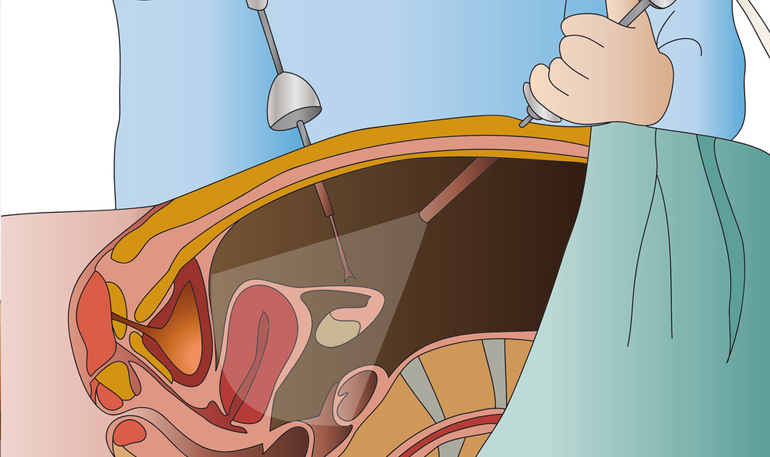
Laparoscopic Surgery
Laparoscopic (keyhole) surgery is performed through small incisions in the abdominal wall. The abdomen is usually inflated with carbon dioxide gas, and the operation is carried out with specialized imaging systems and instruments inserted through these small incisions. With advances in technology and surgical technique, many operations can now be performed laparoscopically, and for many conditions the closed approach is now considered the gold standard.
The main advantages of laparoscopic surgery are less postoperative pain and lower rates of wound infection and incisional hernia. Blood and fluid loss are also lower, lung function is less affected, and hospital stay and time to return to work are significantly shorter than with open surgery.
Laparoscopic procedures require a high level of hand–eye coordination, so the learning curve is correspondingly steep, and advanced training is needed to perform minimally invasive surgery. The team at the center must also be experienced and fully equipped. Although many operations are now performed laparoscopically, it is important that a surgeon using this technique is also experienced in open surgery. Depending on the operation, any laparoscopic procedure may need to be converted to open (conventional) surgery. At that point, the surgeon must decide to convert at the right time and be able to meet all the requirements of open surgery. In cancer cases in particular, patient selection and the experience of the entire surgical team in laparoscopy can affect outcomes. In oncological surgery, performing laparoscopy without compromising oncological principles is the most important factor determining the patient’s prognosis.
Ask the Doctor
+90 312 468 94 76