
Rectal Prolapse
Rectal Prolapse
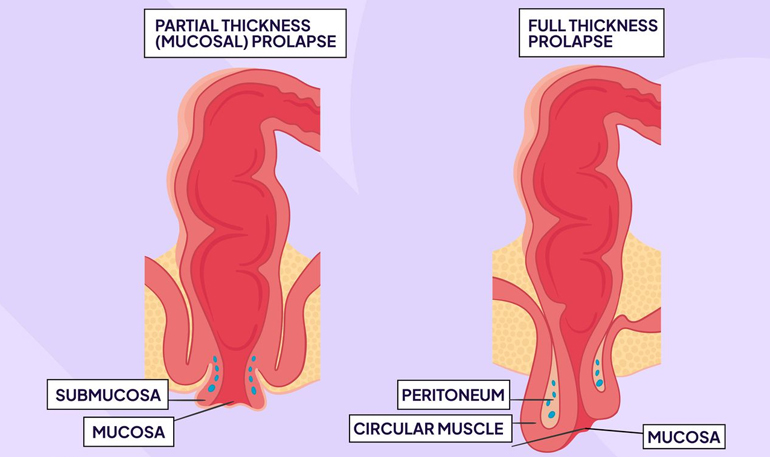
Rectal prolapse and rectal intussusception are anatomical disorders associated with pelvic floor dysfunction. They can be defined as complete or partial descent of the rectum. When the full thickness of the rectum protrudes circumferentially through the anal canal, it is called external rectal prolapse. In intussusception, the descent is limited and does not pass outside the anal canal. The condition becomes more common after the age of 50 and is seen more often in women, nursing home residents and people with cognitive impairment. Patients most commonly present with constipation, gas or fecal incontinence, bleeding, pain and a feeling of incomplete evacuation. Hemorrhoidal disease and rectal tumors should be considered first in the differential diagnosis. External rectal prolapse can be diagnosed on physical examination, whereas diagnosing intussusception and planning appropriate treatment require advanced tests – such as colonoscopy, conventional defecography, MR defecography, anal manometry and endoanal ultrasound – selected according to the patient’s history and examination findings.
Treatment options for rectal prolapse depend on the patient’s findings and the impact of the condition on quality of life. Dietary changes, bowel training, stool softeners and biofeedback are recommended first to improve quality of life, and surgery is considered only when these fail.
Surgical procedures can be divided into abdominal approaches and perineal approaches that do not enter the abdomen. The aim of these procedures is to correct the prolapse, restore normal bowel function and improve quality of life.
In the modern approach, most abdominal operations are performed robotically or laparoscopically, so patients have less pain and return to normal life faster. The main abdominal techniques involve fixing the rectum with sutures or a mesh placed in front of or behind it, or removing part of the large intestine.
Transperineal (from below) approaches avoid entering the abdomen and include repairing the prolapsed segment, removing part of the bowel through the anus, or performing a resection through the anal canal using specialized stapling devices.
Managing rectal prolapse is a highly specialized field. Careful preoperative planning – taking into account the patient’s condition and medical history, the surgeon’s knowledge, experience and command of different techniques, and the hospital’s equipment – and meticulously applying the right surgical method for the right patient increase the chance of successful treatment.
Ask the Doctor
+90 312 468 94 76